
Free tools Windows power users keep installed
One-click scans. No signup required.
Intel has announced the launch of its new Optane SSD DC P4800X solid state drive based on its new 3D XPoint memory. Essentially an SSD memory on a PCIe card with a capacity of 375 GB, the one interesting aspect of which is that it can also function as a RAM as well.
The above can also be considered as the outcome of Intel’s association with Micron that had yielded the 3D XPoint Memory back in July of 2015. The chipmaker had then gone to town trumpeting the crazy capabilities of the new memory which Intel claimed is about a 1,000 times faster than any modern SSD.

Intel also claimed its new 3D Xpoint Memory to have better endurance than NAND by a factor of 1,000 while being 10 times more dense than DRAM. All of those clearly make for breakthrough stuff that can shake up the entire computer storage segment.
Availability starts today itself though on a limited scale. Intel stated production of the SSD would pick up in the second half of the year, which is also when a 1.5 TB PCIe card along with a 750 GB and 1.5 TB U.2 stick will also be in the offering.
Crashes, No Sound, or Screen Glitches?
Random freezes, missing sound and display glitches usually trace back to one bad driver. Find and replace yours safely.Free scan · under a minuteWindows Errors? Fix Them Before They Spread
Repair common Windows errors and clear accumulated junk for a smoother, more stable PC - no reinstall needed.Free scan · no reinstallShopping ad
The same in a 750 GB PCIe model and a 375 GB model in the form of a U.
2 stick will reach markets sooner during the second quarter itself. Meanwhile, the Optane SSD DC P4800X has been priced $1,520 a pop.
Shopping ad
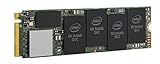
- 1B Storage Capacity
- M2. 2280 Form Factor
- PCIe NVMe 3.0 x4 Interface
- 1800 MB/s Sequential Read Speeds. 1800 Sequential Write Speeds. Intel QLC 3D NAND
Application areas will be servers and data centers that require high read/write times along with low latency. The new P4800X excels here with its 2400 MB/sec read, and 2000 MB/sec write times. Intel claimed latency will be low even during demanding load conditions and high queue depth.
Intel also offered figures in support of its claims, with latency times quoted as less than 60 or 100 microseconds for 99.999 percent of the operations with a queue depth of 1. The same would rise to just about 200 microseconds once queue depth rises to 16.
The Tool Desk
Outbyte Driver Updater FREEFix the driver behind crashes, sound loss and screen glitchesFind Drivers →Outbyte PC Repair FREERepair Windows errors before they cause bigger problemsFix Now →Shopping ad
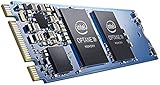
- Snappy PC experience with short boot times, fast application launches, extraordinary gaming experience and responsive browsing
- Pair Intel Optane memory with storage media (HDD, SSD), to get amazing performance and responsiveness without compromising storage capacities
- Supported on 7th Gen Intel Corei3 processor and above
- Requires Optane Ready Motherboard and storage drive such as HDD and/or SSD
- A computer with Intel Optane memory adapts to your everyday computing activities to make your repetitive tasks increasingly faster, smoother and easier to accomplish
For comparison’s sake, the same time spans for the Intel P3700 NAND SSD at less than 2,800 microseconds when serving at 99 percent.
While the above figures do highlight the stupendous capabilities of the new P4800X memory, the same also makes it as a fit case for use in the fields of artificial intelligence computing and new-age machine learning techniques.
Quick Recap
Shopping ad

- OEM PRODUCT, NO PACKAGING.
Product prices and availability are accurate as of the date/time indicated and are subject to change. Any price and availability information displayed on Amazon at the time of purchase will apply.
Independent reader supportYour contribution helps us test, update, and keep practical guides available for everyone.
