Inferse is reader-supported. When you buy through links on our site, we may earn an affiliate commission. As an Amazon Associate I earn from qualifying purchases. Learn more
Nvidia announced the launch of its new Titan Xp which will serve as the company’s new highest end graphics card. In fact, the new Titan is not designed to be just another chip offering dollops of computing performance.
Instead, the latest Nvidia flagship graphics card takes things to a new high, setting new levels of computing prowess that was unheard of so far. All of it can be attributed to the Pascal GP102 GPU that it comes with, as does the 3,840 CUDA cores operating at 1.6 GHz that the chip offers.

Memory speed has gone up too – from the 10 GHz of the Titan X of last year to 11.4 GHz this time. Similarly, the Titan Xp also benefits from 12 GB of GDDR5X RAM. On tap is 12 TFLOPS of processing power, enough for Nvidia to term the new XP as the most powerful graphics card the world has ever seen.
Do these 3 things before closing this tab:
1Scan for outdated or missing drivers - takes under a minute2Clear out junk files and repair common Windows errors3Fix the driver behind crashes, sound loss and screen glitchesCost wise, all of it comes for $1,200 for the new Xp, which again makes it a lot more cost effective vis-a-vis the Quadro P6000. For comparison’s sake, the Quadro P6000 also features the Pascal GP102 GPU and is priced $5,000.
The graphics card will no doubt provide game developers with more leeway to go for more eye-catching graphics in their game offerings, as well as more complexities. The new graphics card with its enhanced performance credentials will also come in handy for developers eager to tap into the emerging virtual reality and augmented reality segments.
As much as it impresses with its strong performance, the Titan Xp also seems built for the purpose too. Flaunting a futuristic design language, the Xp boasts of a body made of die-cast aluminum that allow for strength without adding weight. Nvidia also stated the Xp relies on vapor chamber cooling technology for effective cooing and steady performance even in persistent high load conditions.
Quick Recap
Shopping ad
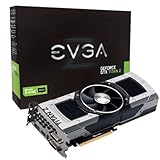
- Base Clock: 705 MHZBoost Clock: 876 MHzMemory Clock: 7000 MHz EffectiveCUDA Cores: 5760Bus Type: PCI-E 3.0Memory Detail: 12288MB GDDR5Memory Bit Width: 768 BitMemory Speed: 0.28nsMemory Bandwidth: 672 GB/s
- NVIDIA SLI ReadyNVIDIA SMX EngineNVIDIA GPU BoostNVIDIA Adaptive Vertical SyncNVIDIA SurroundSupports four concurrent displaysMicrosoft DirectX 12 API (feature level 11_0)Support
- NVIDIA 3D Vision ReadyNVIDIA CUDA TechnologyPCI Express 3.0 SupportOpenGL 4.4 SupportOpenCL SupportNVIDIA FXAA TechnologyNVIDIA TXAA Technology
- Recommended PSU: 700W or greater power supply with a minimum of 42 Amp on the +12 volt rail
Shopping ad

- OS Certification : Windows 7 (64 bit), Windows 10 (64 bit) (April 2018 Update or later), Linux 64 bit
- 4609 NVIDIA CUDA cores running at 1770 MegaHertZ boost clock; NVIDIA Turing architecture
- New 72 RT cores for acceleration of ray tracing
- 577 Tensor Cores for AI acceleration; Recommended power supply 650 watts
Shopping ad

- [Engine Specs] CUDA Cores: 3072 | Base Clock (MHz): 1000 | Boost Clock (MHz): 1075 | Texture Fill Rate (GigaTexels/sec): 192
- [Memory Specs] Memory Clock: 7.0 Gbps | Standard Memory Config: 12 GB | Interface: GDDR5 | Interface Width: 384-bit | Bandwidth (GB/Sec): 336.5
- [Display Support] Max Digital Resolution: 5120x3200 | Max VGA Resolution: 2048x1536 | Standard Display Connectors: Dual Link DVI-I, HDMI 2.0, 3x DisplayPort 1.2 | Multi Monitors: 4 Displays | HDCP: Yes | Audio Input for HDMI: Internal
- [Graphic Card Dimensions] Height: 4.376 Inches | Length: 10.5 inches | Width: Dual-Width
- [Thermal & Power Specs] Max GPU Temperature (in C): 91 C | Graphics Card Power (W): 250 W | Recommended System Power (W)**: 600 W | Supplementary Power Connectors: 6-pin + 8-pin
Shopping ad

- OS Certification-Windows 7 64-bit, Windows 10 64-bit (April 2018 Update or later),Linux 64-bit
- 4608 NVIDIA CUDA cores running at 1770 MHz boost clock. NVIDIA Turing architecture
- New 72 RT cores for acceleration of ray-tracing
- 576 Tensor Cores for AI acceleration